
I recently went three days without eating.
Each morning, my wife wrapped a tourniquet around my arm and filled a small vial with blood.
Why volunteer for this? I’m not chasing immortality or trying to hack my biology.
I’m a scientist, and I couldn’t resist the chance to see data that no one has seen before.
Our company recently introduced a new technology that digitizes the regulome, the system your cells use to make decisions based on their environment. Decisions that were invisible before. Never seen on a blood panel, scan, or genetic analysis. A new way to see how our cells handle stress, infection, toxins, and anything else from our strange modern world.
Don’t you want to know what’s going on in there?
Why do you sometimes wake up feeling like garbage after eight full hours of sleep? Your HRV looks fine. Your latest bloodwork came back normal. Even your fully sequenced genome revealed nothing concerning.
The answer lies in your regulome, the hidden operating system guiding how your genes respond moment-to-moment, quietly interpreting the world around you.
It’s a bit like a computer
I know fellow biologists will cringe at this metaphor, but bear with me.
Hardware/Input → Software → Output
A computer’s hardware is full of switches (transistors). The switches flip on and off, controlled by software. The software takes inputs from your mouse or keyboard and uses its logic to decide what switches to flip. Those flips create the output you see on screen.
How does this translate to biology?
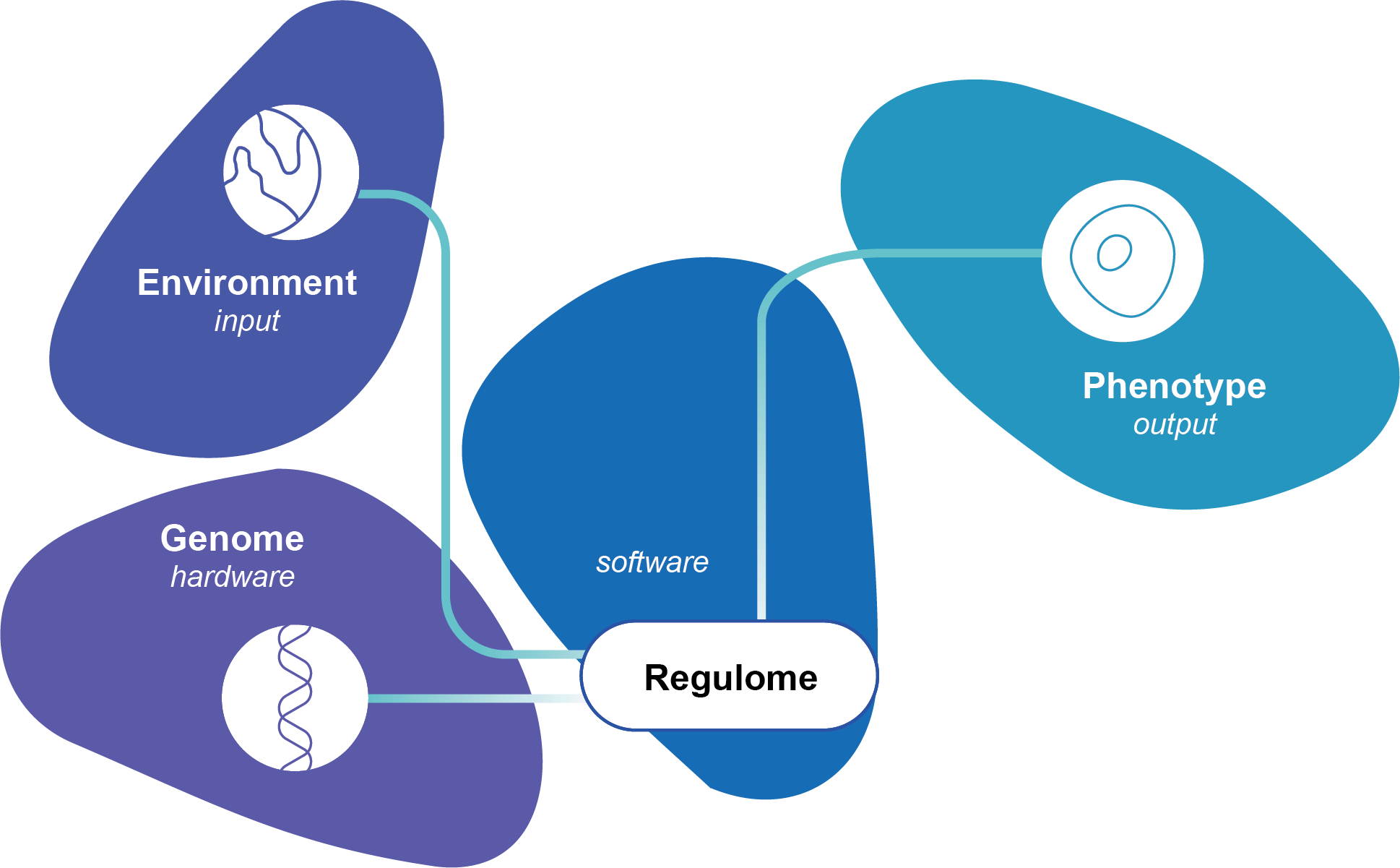
Your genome is the hardware. It’s nearly identical across all your cells and shares 99.9% similarity with every other human. It’s what we have to work with. But it’s not alive on its own.
The regulome is the software. It processes inputs too, but not from the keyboard.
Nutrient availability, oxygen levels, toxins, invading microbes, and signals from your own body, and so much more. Then the regulome takes this information, and uses logic to decide how to despond. Then it starts flipping switches. Thousands of proteins flying on and off the genome and turn genes on or off as needed.
This regulome software transforms stress signals into inflammation, fasting into autophagy, exercise into adaptation. Unlike your genome, the regulome constantly rewires itself, updating second-by-second based on new information.
Genome = hardware. Regulome = software. Together, they determine your output (phenotype). Your biology, in real time. Fundamentally this is your health.
Genome → Regulome → Phenotype (RNA, protein, biological outcomes)
Early in my career, I worked on the ENCODE Project, a massive effort launched in 2003 to map the regulome and its logic. With the technology available at the time, we could map just a 3% of the regulome proteins over the course of 20 years.
Now, our new technology can reveal the entire regulome from a single blood draw. It feels like biology’s next big leap, and I’m not sure anyone knows what to expect.
The Experiment: Watching My Body Starve
So what should the first human regulome experiment be?
I chose an extended fast.
I’d tried fasting once before because longevity gurus recommended it, and I kind of liked the challenge. It’s safe and well-studied. Many cultures use it as a ritual. It reliably causes major changes as the body shifts its main fuel from sugar to ketones.
So I dove in.
72 hours, no calories. I drank only water, electrolytes, and a little caffeine to stay sane. My wife (don’t worry, she’s a nurse) drew blood after my final meal, then again at 24 hours, 48 hours, and 72 hours. After 72 hours, I ate a big breakfast and took one more blood sample.1
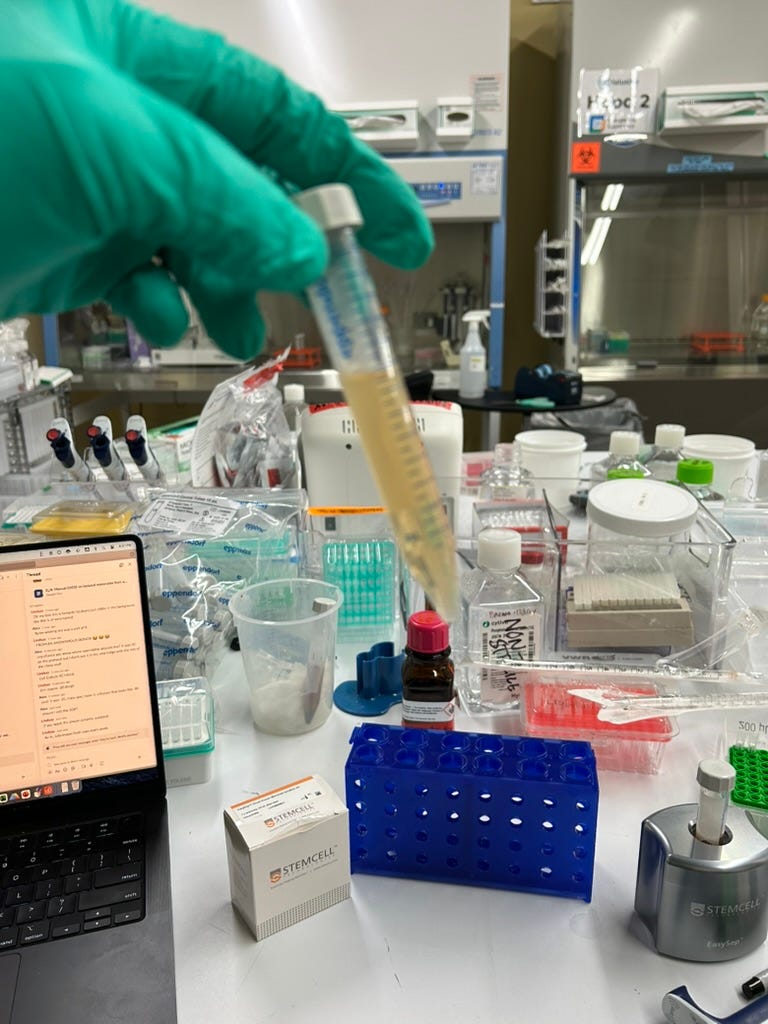
Each time, I profiled the full regulome from a specific white blood cell type (monocytes). These cells act as sentinels in the immune system, monitoring the environment on high alert. As part of this job description, monocytes respond quickly and strongly to their environment. Perfect for watching my body starve.
Results
A few years ago, doing this experiment would have meant picking just a handful of known regulome proteins ahead of time. We’d probably choose FOXO, NFkB, familiar suspects, studied before in fasting. We'd see exactly what we expected. We'd be looking under the lamppost, again.
But now, we didn't have to pick favorites.
We get to watch the entire regulome dynamically change across the fast. With each blood draw, we tracked over 4,000 proteins. Over 30% shifted over the course of the fast, engaging or abandoning my genome. Many had been linked to fasting before.
Of course, the familiar faces showed up clearly
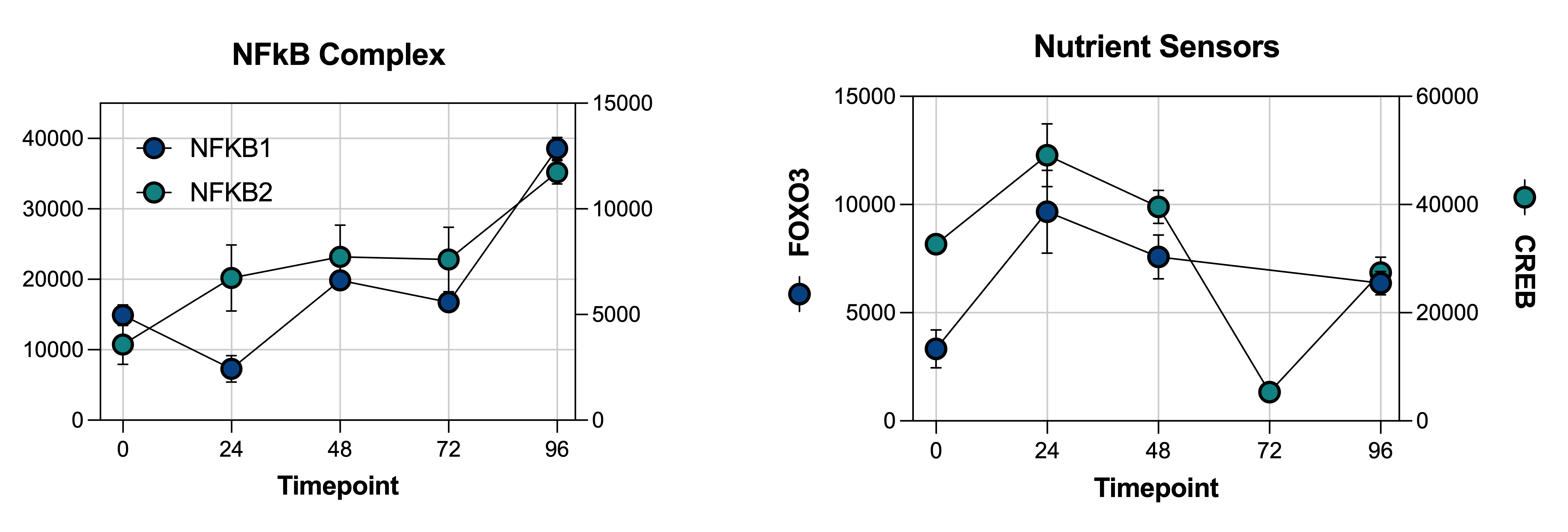
FOXO transcription factors surged quickly, orchestrating stress resistance, antioxidants, and autophagy. These proteins double lifespan when activated in worms and have genetic links to longevity in humans.
NFkB, the inflammation regulator, stayed dampened throughout fasting, then surged back sharply once I ate again.
CREB, a sugar-sensing regulator, spiked early, then shut down abruptly as my body settled into the fast. You can see it spike back up after the re-feed too.
The more I dug, the more I saw. The refeed was interesting too.
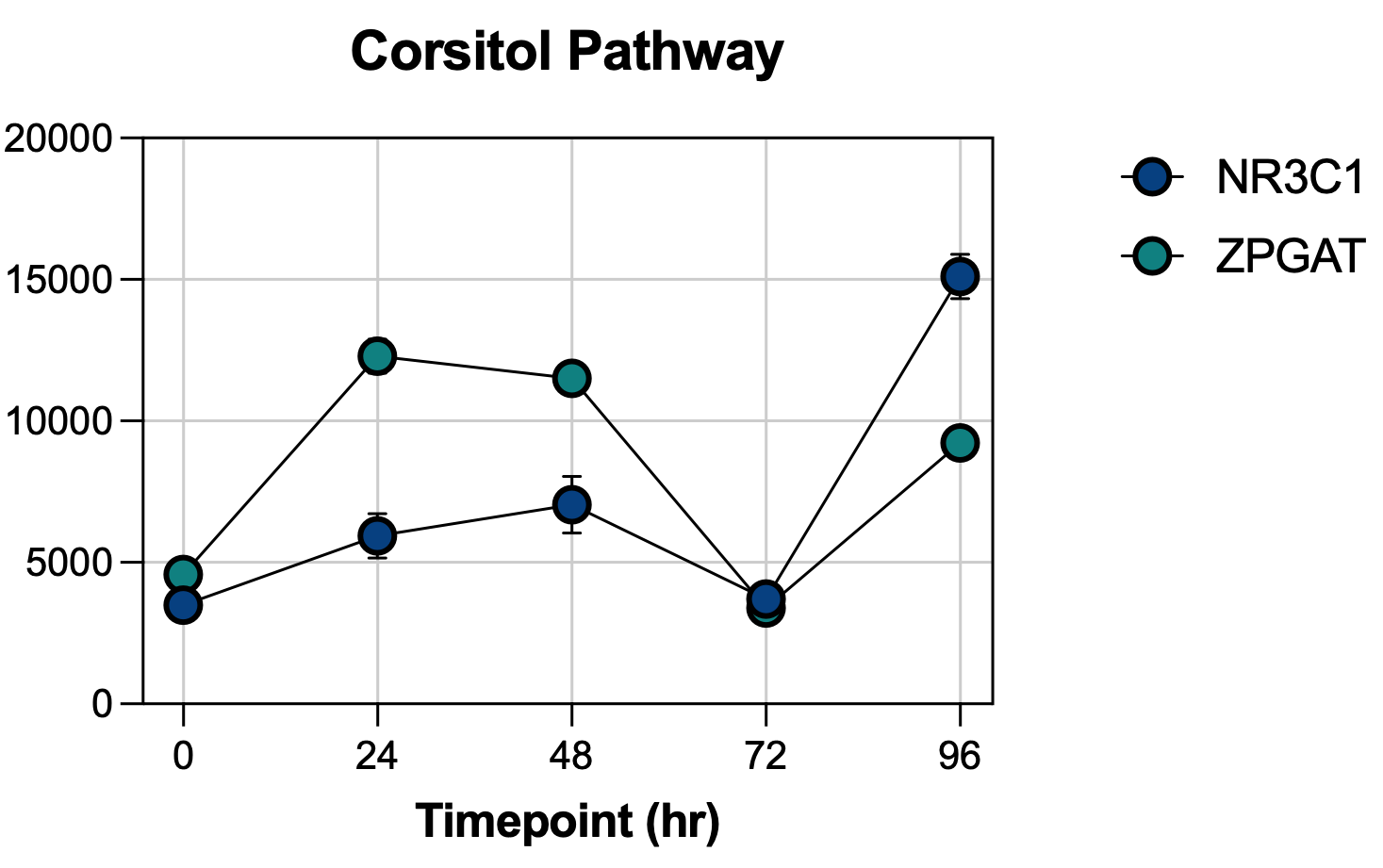
Levels of the active cortisol receptor (NR3C1) rise early in fasting, dip by day 3, then spike ~4-fold after refeeding. Different cells interpret this stress hormone differently. But in monocytes, we see a striking surge/crash/surge rhythm in cortisol signaling. Intriguingly, a little-known protein called ZGPAT mirrors this pattern almost perfectly. Could it be a missing piece of the stress-response circuitry encoded deep in our biological software?
I kept digging and there were dozens more proteins quietly flooding onto and off DNA, flipping switches in the dark. Many with sparse scientific histories.
Take PLSCR1.
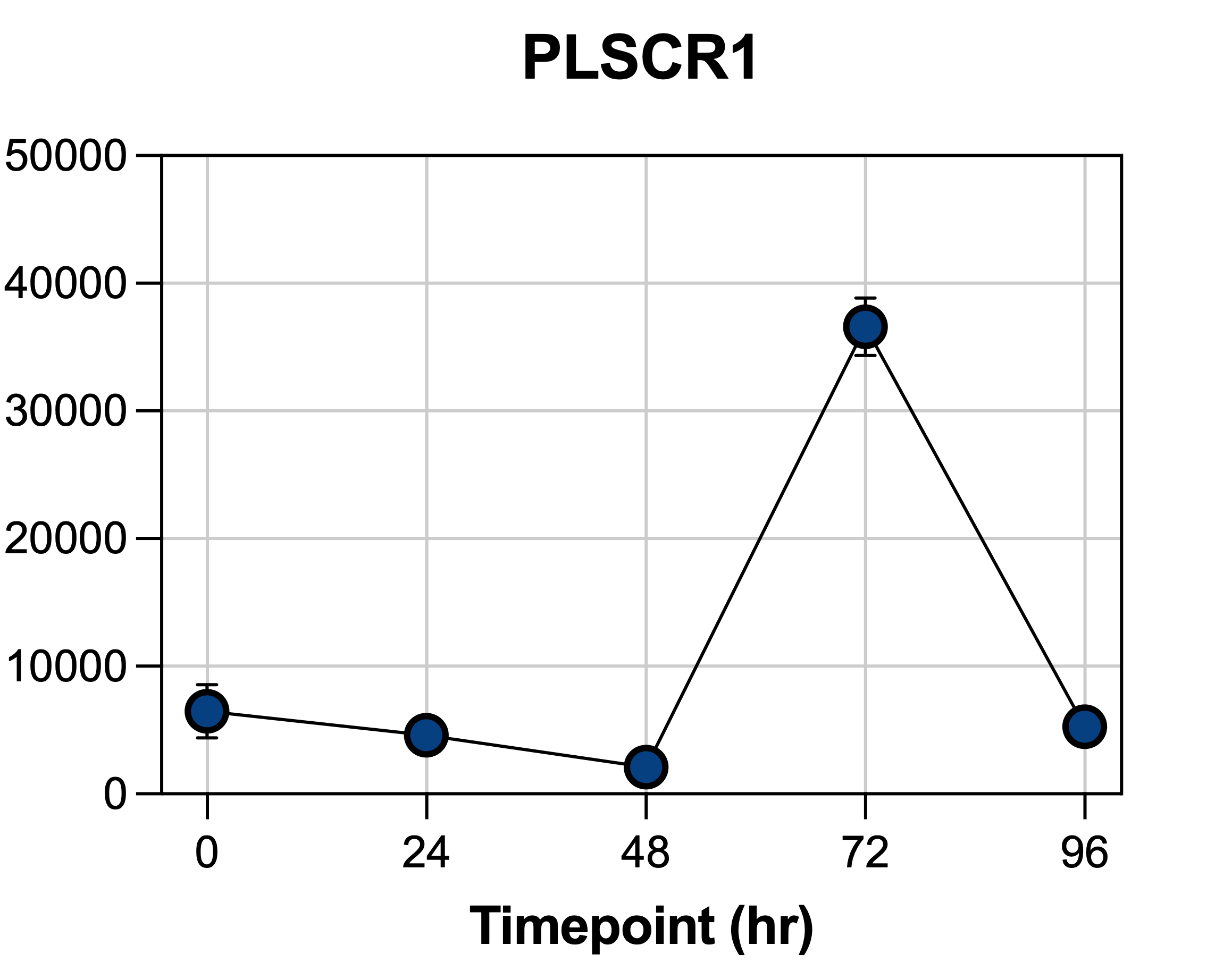
I'd never even heard of it. It lives on the outside of the cell keeping the outer membrane in check. But recently people realized it hung around DNA too.
And now, here it was: the single most dramatic responder in my entire fast. It spiked on day three, deep into ketosis. Some whispers in the literature suggest PLSCR1 might interact with the NAD+ axis. Fasting boosts NAD+ levels, and NAD+ naturally declines with age (reversing this is being tested in the clinic). -
Could PLSCR1 be part of the link between nutrition, longevity, and genomic control?
Without observing the whole regulome, we might never have noticed PLSCR1, the most intense responder in the whole experiment. And that’s just one of the hundreds of other changes we saw. Fasting is one of humanity’s oldest biological interventions, extensively studied for decades. Yet right beneath the surface, it was quietly activating cellular machinery we’d never clearly seen before.
If the majority of the fasting response involves unknown regulatory proteins, what about disease?
How many critical drivers of illness are invisible to current methods? What are drugs doing to this system? Chronic exposure to chemicals in the environment? How much biology have we simply missed?
Building in the Open
This technology is too big for one company or one lab. So we’re opening up our doors
We just launched the Regulome Early Access Program. If you’re pushing the boundaries of biology, we want you involved. You’ll get free access to the same tools we use internally, enabling you to run native regulome profiling experiments. All data will be open-source and free to publish.
Meanwhile, my own n-of-1 experiment continues and I’ll share all the results here. Next month, I’m expecting a new baby, so we’ll get a nice experiment on how sleep deprivation shocks the regulome.
But that’s just the beginning. On the docket:
Extreme exercise
Alcohol intake
Sauna and ice bath
and more
Something specific you want to see? Let me know!
We’re can finally read the ancient software running inside us and responding to our modern life. As the fasting experiment showed, most of this software remains completely uncharted.
Let’s watch, in real-time, our biological code and start to take control.
—
Thank you for your interest in science. Follow along as I document the invisible biology of stress, sleep, exercise, and everything else that shapes us.
If you’re a researcher interested in using this technology for your own work, check out our free Tech Access Program
This is an n-of-1 experiment. Not peer-reviewed and inherently limited. My goal is to explore new biology and generate hypotheses for further testing. Interpret accordingly. Full datasets and methods are available upon request.